
In the fast-paced business landscape of 2026, the line between visionary persistence and stubborn delusion is thinner than ever. Whether you are a startup founder, a project manager, or an entrepreneur scaling a venture, the question remains the same: Should you stay the course or change your trajectory?
Making the wrong call can be the difference between becoming the next industry titan—like Slack or Instagram—and burning through your runway with nothing to show for it. In this guide, we break down the definitive framework for making this high-stakes decision with data-driven confidence.
The Psychology of the “Sunk Cost” Trap
Before analyzing data, you must address the human element. The sunk cost fallacy is the primary reason leaders fail to pivot when they should. You have invested time, capital, and emotional energy into a specific vision, making it psychologically painful to admit that it isn’t working.
To move forward, you must objectively detach your self-worth from the product. Genuine advice for 2026 dictates that you evaluate your current project as if you were a new consultant hired to audit it today. Would you recommend doubling down, or would you suggest a pivot based on the current market data?
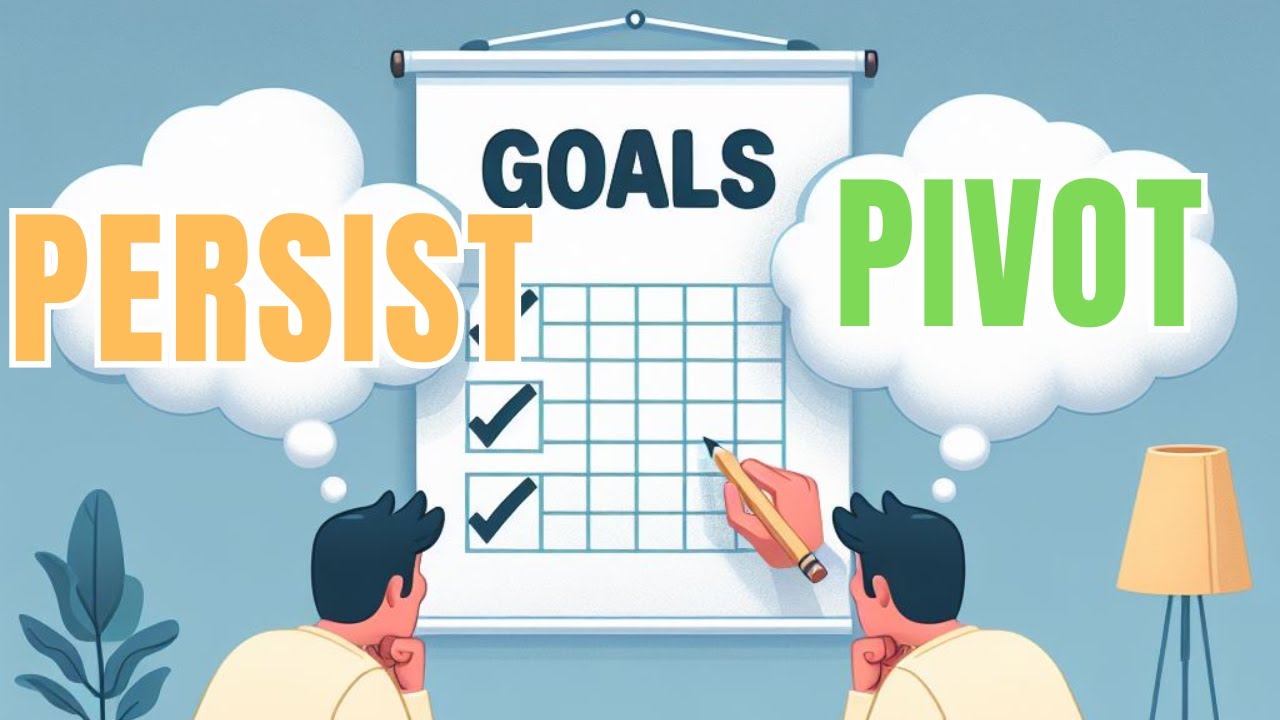
When to Persist: Identifying the “True Signal”
Persistence is not just about willpower; it is about validated learning. You should persist if you are seeing clear indicators that your core hypothesis is correct, even if your execution is currently lagging.
Signs You Should Double Down
- Customer Retention is High: If your users stay, even if the product is buggy or limited, you have product-market fit.
- The Problem is Urgent: Your customers are telling you that your solution solves a “hair-on-fire” problem.
- You Have a Competitive Moat: You are successfully building a unique advantage that competitors cannot easily replicate.
Persistence requires a data-driven discipline. Ensure you aren’t just “working hard”—you are working on the right levers. If your metrics are trending upward, even slowly, you are likely in a phase of optimization rather than needing a radical pivot.

The Art of the Pivot: When to Change Direction
A pivot is not a failure; it is a strategic recalibration. In 2026, the market evolves in months, not years. If you find yourself pushing a boulder uphill with no momentum, it is time to reassess.
The “Pivot Threshold” Checklist
- The “Crickets” Factor: You have reached out to your target audience, optimized your messaging, and refined your pricing, yet interest remains stagnant.
- Changing Market Dynamics: New technologies (like advancements in AI or shifting regulatory landscapes) have rendered your original value proposition obsolete.
- Unit Economics are Unfixable: You have exhausted all efforts to lower your Customer Acquisition Cost (CAC) or increase Lifetime Value (LTV), and the math simply never works.
Remember, successful companies like Shopify didn’t start as the e-commerce giants we know today; they pivoted from selling snowboards. A pivot is simply an evolution of your business model to better serve the market you have discovered.

The Execution Playbook: A Framework for 2026
When you are at the crossroads, follow this structured approach to ensure you aren’t making a reactive, emotional decision:
- Define Your Thresholds: Set specific, measurable goals for the next 90 days. If you don’t hit 80% of your targets, commit to a pivot.
- Conduct “Exit Interviews”: Talk to the people who chose not to buy. Their feedback is more valuable than that of your existing customers.
- Resource Audit: Calculate your “runway” honestly. How many months of survival do you have? A pivot often requires a buffer of cash to test the new direction.
- Consult Your Advisory Board: We often have blind spots. Present your data—not your emotions—to mentors or advisors to get an objective perspective.
Conclusion: Mastering the Pivot vs. Persist Balance
The most successful leaders in 2026 are those who treat their businesses like an ongoing experiment. There is no shame in pivoting when the data demands it, and there is immense honor in persisting when you know you are on the right track.
Avoid reactive shifts caused by a bad week or a single competitor’s announcement. Instead, anchor your decisions in long-term data. By maintaining this discipline, you ensure that your energy is always spent on the path of greatest impact, whether that path leads you to stay the course or forge an entirely new one.