
Do you feel like you are constantly running a race where the finish line keeps moving? In 2026, the world moves faster than ever. With the integration of augmented reality, hyper-personalized AI notifications, and the “always-on” digital culture, the struggle to stay focused has reached an all-time high. Persistent procrastination is no longer just a “bad habit”; it is a modern epidemic affecting our mental health and career trajectories, often stemming from challenges with self-regulation skills. This guide will show you how to overcome persistent procrastination with micro-goals, a cornerstone of effective goal setting.
If you have tried every time-management app on the market and still find yourself scrolling through feeds instead of finishing your project, you aren’t lazy. You are likely experiencing emotional resistance to the scale of your tasks. The secret to breaking this cycle isn’t more willpower—it is the strategic implementation of micro-goals, one of the most effective productivity techniques for modern challenges.
In this comprehensive guide, we will explore why micro-goals are the most effective psychological tool to defeat procrastination, leveraging principles of behavioral activation, and how you can master them to reclaim your productivity in 2026.
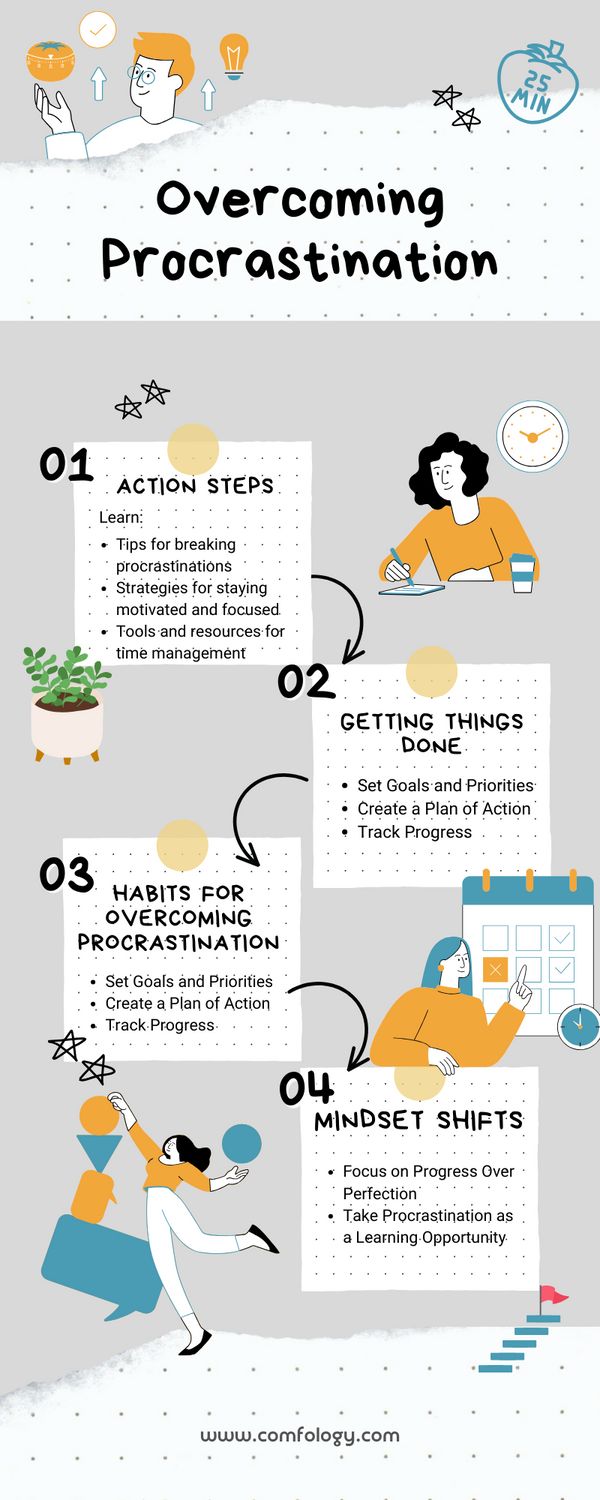
Section 1: The Psychology of Procrastination in 2026
To solve a problem, we must first understand its roots. For decades, procrastination was wrongly labeled as a time-management issue. However, modern neuroscience confirms that it is actually a mood regulation problem.
The Amygdala vs. The Prefrontal Cortex
When you look at a massive project—like writing a 50-page report or launching a new business—your brain’s amygdala (the threat detector) perceives it as a source of stress. This triggers a “fight or flight” response. Since you can’t fight the report, you “flee” to a more pleasant activity, like checking social media.
The Rise of Present Bias
In 2026, our brains are more susceptible than ever to Present Bias. This is the tendency to prioritize immediate rewards (the hit of dopamine stimulating the dopamine reward pathway from a video) over long-term benefits (the satisfaction of finishing a project). Because our digital environments are designed to provide instant gratification, the “future self” who benefits from our hard work feels like a total stranger.
Why Traditional Goals Fail
Traditional goal-setting often involves “Big, Hairy, Audacious Goals” (BHAGs). While inspiring, these goals are often too abstract. In 2026, the cognitive load of modern life makes large goals feel paralyzing, challenging our cognitive control. This is where the concept of micro-goals changes the game.
Section 2: What Exactly are Micro-Goals?
A micro-goal is the smallest, most immediate version of a task that you can possibly perform. It is a task so small that it feels impossible to fail. While a standard goal might be “Write the first chapter of my book,” a micro-goal is “Open a blank document and type one sentence.”
The Anatomy of a Micro-Goal
For a micro-goal to be effective in overcoming persistent procrastination, it must meet three specific criteria:
- Immediate: It can be started right now.
- Specific: There is no ambiguity about what needs to be done.
- Low-Stakes: It requires almost zero emotional energy to initiate.
The “2-Minute Rule” Evolution
A popular concept in productivity is the 2-Minute Rule, which suggests that if a task takes less than two minutes, do it immediately. In 2026, we have refined this into the “Micro-Start” technique. This involves breaking a task down until the first step takes less than 60 seconds.
By focusing on the micro-start, you bypass the amygdala’s threat response, providing powerful task initiation strategies. Your brain doesn’t see “Write a 2026 Business Strategy” as a threat if you are only telling it to “Type the date at the top of the page.”
Section 3: The Step-by-Step Framework for Implementation
Ready to stop the cycle of delay? Follow this 2026-optimized framework to integrate micro-goals into your daily life and learn how to overcome persistent procrastination with micro-goals.
Step 1: Task Atomization
Take your primary objective and “atomize” it. This means breaking it down into its smallest constituent parts.
Macro-Goal: Clean the entire house.
Task: Clean the kitchen.
Micro-Goal: Put three forks in the dishwasher.
The goal isn’t to finish the kitchen; it is simply to engage with the environment. Once the forks are in, the “barrier to entry” is broken.
Step 2: Use “Implementation Intentions”
Research shows that you are 2x to 3x more likely to complete a task if you decide exactly when and where you will do it. Use the formula: “If/When [Situation], then [Micro-Goal].”
Example: “When I sit down with my morning coffee, I will open my email inbox and delete one junk mail.”
Step 3: The “Success Spiral”
Micro-goals work because they build Self-Efficacy. Each time you complete a micro-goal, your brain receives a small win. These wins stack up, creating a “success spiral” and fostering positive habit formation. In 2026, productivity experts call this Momentum Engineering, a powerful form of motivation enhancement. You aren’t working toward a massive finish line; you are simply maintaining the momentum of small wins.
Step 4: The 10-Minute Time Block
If you find yourself stuck even with micro-goals, use a Time-Box. Tell yourself you will work on your micro-goals for exactly 10 minutes. In 2026, many use AI-driven timers that block all device notifications during this window. Knowing there is an end in sight reduces the psychological dread of the task.
Section 4: Leveraging 2026 Technology to Support Micro-Goals
We live in an era where technology can either be our greatest distraction or our most powerful ally. To overcome persistent procrastination, you must curate your digital environment.
AI Task-Breakdown Assistants
In 2026, AI agents can take a prompt like “I need to renovate my backyard” and automatically generate a list of 200 micro-tasks. Using these tools takes the “thinking” out of the process. When you don’t have to decide what to do next, you save executive function for the actual doing.
Haptic Feedback and Wearables
Modern wearables now use haptic “nudges” to remind you of your micro-goals. Instead of a loud alarm, a gentle vibration on your wrist can signal it’s time for a “1-minute stretch” or “5 minutes of filing.” This subtle approach keeps you in a flow state rather than jarring you out of it.
Digital Minimalism and Focus Modes
Persistent procrastination is often fueled by the “Infinite Scroll.” Use the Focus Mode 4.0 features available on most 2026 devices. These modes allow you to whitelist only the specific micro-task apps you need, effectively turning your smartphone into a single-purpose tool.

Section 5: Overcoming Common Pitfalls
Even with the best micro-goal strategy, you may encounter obstacles. Here is how to navigate them.
Dealing with “Micro-Goal Fatigue”
Sometimes, the sheer number of small tasks can feel overwhelming. If this happens, stop tracking and start doing. Choose the single most important micro-goal and ignore the rest of the list. The goal of this system is to reduce stress, not add to it.
The Trap of “Productive Procrastination”
Be careful not to spend all your time planning micro-goals instead of executing them. If you have spent 30 minutes color-coding your task list, you are practicing productive procrastination. Remember: a micro-goal is only useful if it leads to physical or digital action within 60 seconds.
The Importance of Self-Compassion
In 2026, the pressure to be “hyper-productive” is intense. If you have a day where even micro-goals feel like too much, practice self-compassion. Research from the University of Sheffield shows that students who forgave themselves for procrastinating on the first exam actually procrastinated less on the second. Beating yourself up only increases the emotional distress that causes procrastination in the first place.
Section 6: Real-World Examples of Micro-Goal Success
To illustrate the power of this method, let’s look at three scenarios common in 2026:
- The Remote Developer: Instead of trying to “Fix the bug in the legacy code,” the micro-goal is “Add one comment to the code explaining the current error.” This small act of engagement often leads to a breakthrough.
- The Content Creator: Instead of “Film a 10-minute video,” the micro-goal is “Set the tripod in the corner of the room.” Once the equipment is out, the resistance to filming vanishes.
- The Fitness Enthusiast: In an era of VR workouts, the micro-goal isn’t “Complete a 45-minute HIIT session.” It is “Put on my left sneaker.”
Statistics show that individuals who use micro-goal setting report a 40% increase in task completion rates compared to those who set large, weekly objectives. Furthermore, these individuals report significantly lower levels of cortisol (the stress hormone) at the end of the workday.
Conclusion: Small Steps, Massive Results
As we navigate the complexities of 2026, the ability to manage our attention is our most valuable asset. Persistent procrastination is not a character flaw; it is a signal that your goals are too big for your current emotional bandwidth.
By embracing micro-goals, you strip away the fear of failure, effectively overcoming mental blocks. You replace the “Wall of Resistance” with a series of small, manageable steps. You stop waiting for “motivation” to strike and start creating it through action.
Remember: The hardest part of any journey is the first inch. Stop looking at the mountain. Look at your feet. Take one tiny step today. Then take another. Before you know it, you will look back and realize you’ve conquered the summit.