
In 2026, the complexity of web applications has reached an all-time high, driven by real-time AI integrations and high-fidelity user interfaces. Persistent data structures have evolved from a niche functional programming concept into a mandatory requirement for building high-performance React applications. If you want to ensure your state management is predictable, fast, and resilient, understanding how to implement these structures is no longer optional.
This guide explores the intersection of immutability, structural sharing, and data persistence to help you build the next generation of React software. We will dive deep into why persistent data structures are the backbone of modern performance optimization and how you can implement them today.
What Are Persistent Data Structures?
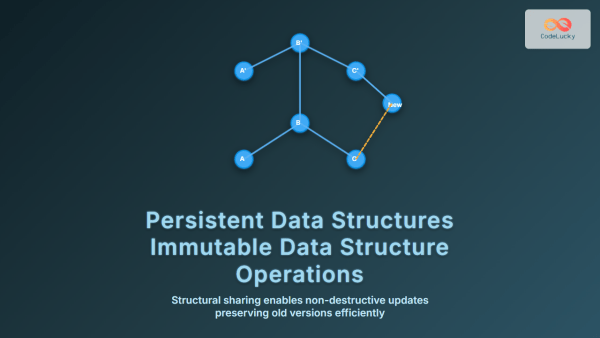
In computer science, a persistent data structure is one that always preserves the previous version of itself when it is modified. Unlike “ephemeral” structures that are updated in place, persistent structures are effectively immutable. When you change a value, the structure returns a new version while keeping the original intact.
This is achieved through a technique called structural sharing. Instead of copying the entire data set—which would be a performance nightmare—the new version of the structure shares most of its nodes with the previous version. This minimizes memory usage and ensures that operations remain lightning-fast even with massive datasets.

Why React Developers Need Persistence in 2026
React’s reconciliation process relies heavily on identifying changes in state. By using persistent data structures, you enable referential equality checks, which are significantly faster than deep comparisons.
- Performance Optimization: React can skip re-renders of entire component trees by simply checking if a reference has changed (`prevData === newData`).
- Time-Travel Debugging: Tools like Redux DevTools thrive on persistence, allowing you to jump back to any previous state without side effects.
- Predictability: Since data cannot be mutated in place, you eliminate a whole class of “heisenbugs” related to shared state being changed unexpectedly.
Implementing Immutability with Modern Tools
By 2026, the JavaScript ecosystem has matured, offering several ways to implement persistent data structures natively and through libraries.
1. Using JavaScript Records and Tuples
The long-awaited Record and Tuple proposal is now a staple in modern development. These are deeply immutable primitive types that allow for persistent data handling without external libraries.
- Records are like immutable objects: `#{ x: 1, y: 2 }`
- Tuples are like immutable arrays: `#[1, 2, 3]`
2. Immer.js: The Industry Standard
Even with native improvements, Immer.js remains the go-to library for React developers. It uses a “copy-on-write” mechanism where you “mutate” a temporary draft, and Immer produces the next persistent state based on your changes. This provides the best of both worlds: a mutable coding style with immutable results.
Bridging the Gap: Data Persistence vs. Persistent Structures
While “persistent data structures” refers to the immutability of data in memory, “data persistence” refers to saving that state to a storage medium. In 2026, a seamless user experience requires both. You need your data structures to be immutable in-memory and durable across sessions.
Handling State Persistence with Redux Persist
For applications using Redux or similar state containers, Redux Persist is the gold standard for saving your store to LocalStorage or IndexedDB. This ensures that when a user refreshes their browser or returns after a day, their state remains exactly as they left it.
The Rise of IndexedDB for Large Datasets
As React apps handle more local data (especially for offline-first AI models), IndexedDB has surpassed LocalStorage for persistence. It allows for much larger storage limits and supports complex queries, making it ideal for caching persistent data structures that represent thousands of records.
Step-by-Step: Implementing a Persistent Workflow in React
To implement a truly robust system, follow this three-tier architecture that combines functional programming with storage reliability.
Step 1: Define Your Immutable State
Start by ensuring your state is managed through a reducer or a state hook that prevents mutation. Use Object.freeze() in development to catch accidental mutations early. In 2026, TypeScript’s `Readonly` utility is your best friend here.
Step 2: Implement Structural Sharing
When updating nested state, use the spread operator or libraries like Immer to ensure you aren’t cloning the entire object tree. This keeps your React application responsive by maintaining references to the parts of the state that didn’t change.
Step 3: Hydrate and Dehydrate
Connect your state to a persistence layer. Use a middleware to “dehydrate” your state (convert it to a string or binary format) and save it to a storage system like SQLite (via Wasm) or IndexedDB. Upon app launch, “hydrate” the state back into your persistent data structures.

Performance Considerations for 2026
While persistent data structures offer massive benefits, they aren’t free. Structural sharing involves a small overhead during the “write” phase. However, this is almost always offset by the massive gains during the “read” and “render” phases in React.
- Memory Management: Modern browsers are better at garbage collecting old versions of persistent structures, but you should still monitor memory leaks in long-running SPA sessions.
- Serialization Costs: Saving a massive state tree to disk can cause main-thread jank. Always use Web Workers or asynchronous storage APIs to handle the persistence layer without blocking the UI.
Conclusion
Implementing persistent data structures in React is the key to building scalable, bug-free, and high-performance applications in 2026. By leveraging structural sharing for in-memory state and robust storage APIs for long-term persistence, you create an environment where data is both safe and incredibly fast to process.
Whether you are using the latest native JavaScript Features, Immer.js, or Redux Persist, the goal remains the same: treat your data as a series of snapshots in time. This approach not only simplifies your logic but also provides the seamless, “instant-on” experience that modern users demand.