
In the landscape of modern application development, the paradigm has shifted. As we move deeper into 2026, the local-first software movement, a cornerstone for modern `offline-first applications`, has evolved from a niche architectural choice into a standard requirement for high-performance, user-centric applications. Developers are no longer settling for “cloud-only” dependencies; they are building tools that prioritize data ownership, offline functionality, and seamless synchronization.
The core challenge remains: how do we manage complex state on the client side without sacrificing performance or reliability? Choosing the best persistent storage for local-first software development is no longer just about picking a database—it is about architecting an experience where the user’s device acts as the primary source of truth.
Why Local-First Architecture Matters in 2026
Local-first software puts the user in control. By keeping data primarily on the device, you eliminate the “spinning wheel of death” associated with network latency. Users expect their apps to be snappy, responsive, and—most importantly—functional even when their internet connection drops, delivering an `enhanced user experience`. This user-centric approach underscores the critical need for the best persistent storage for local-first software development.
Statistics from early 2026 show that `Progressive Web Apps (PWAs)` and other applications implementing offline-first persistence see a 40% higher retention rate compared to cloud-dependent counterparts. When you build for local-first, you aren’t just building an app; you are building a reliable digital workspace that respects the user’s time and connectivity constraints. Achieving this reliability hinges on implementing the best persistent storage for local-first software development.
Evaluating Your Options: The Local-First Storage Stack
When selecting a storage engine for your local-first application, you are essentially choosing the best persistent storage for local-first software development, and you must balance latency, consistency, and conflict resolution. Not all storage solutions are created equal, and the “best” choice depends heavily on your data structure.
1. IndexedDB and the Power of Low-Level APIs
For web-based local-first apps, including many emerging `WebAssembly (Wasm) applications`, IndexedDB remains a strong contender for the best persistent storage for local-first software development, serving as the bedrock of client-side storage. While it is notoriously difficult to work with directly, wrappers like Dexie.js have transformed it into a powerhouse. In 2026, the ecosystem has matured, offering better support for large binary objects and complex indexing, making it ideal for document-heavy applications.
2. SQLite: The Gold Standard for Reliability
The rise of Wasm-based SQLite has changed the game, offering a compelling option for the best persistent storage for local-first software development. By bringing a battle-tested relational database into the browser or the `mobile-first development` environment, developers can now utilize SQL queries for complex data manipulation locally. SQLite is arguably the most robust choice for structured data in 2026, offering ACID compliance that simple key-value stores cannot match.
3. Conflict-Free Replicated Data Types (CRDTs)
While selecting the best persistent storage for local-first software development is crucial, storage is only half the battle; the other half is synchronization. Libraries like Yjs and Automerge have become essential companions to local storage, enabling seamless `real-time collaboration` through `eventual consistency` models. They allow your app to merge changes from multiple devices automatically, ensuring that your local-first storage is always in sync without forcing the user to resolve manual merge conflicts.
Designing for Resilience: Beyond Simple Storage
Building a robust local-first application, and truly implementing the best persistent storage for local-first software development, requires more than just picking a database. You need a comprehensive persistence strategy that accounts for edge cases, such as browser storage clearing, device migration, and massive datasets.
The Hidden Truth About Client-Side Persistence
As highlighted in recent 2026 development studies, relying solely on `localStorage` for anything other than trivial settings is a dangerous trap. `localStorage` is synchronous, blocking the main thread, and limited to a tiny 5MB quota. For professional-grade local-first software, choosing the best persistent storage for local-first software development means leveraging asynchronous storage APIs that can handle gigabytes of data without impacting UI performance, a critical factor for `edge computing` architectures.
Managing State in Transient Environments
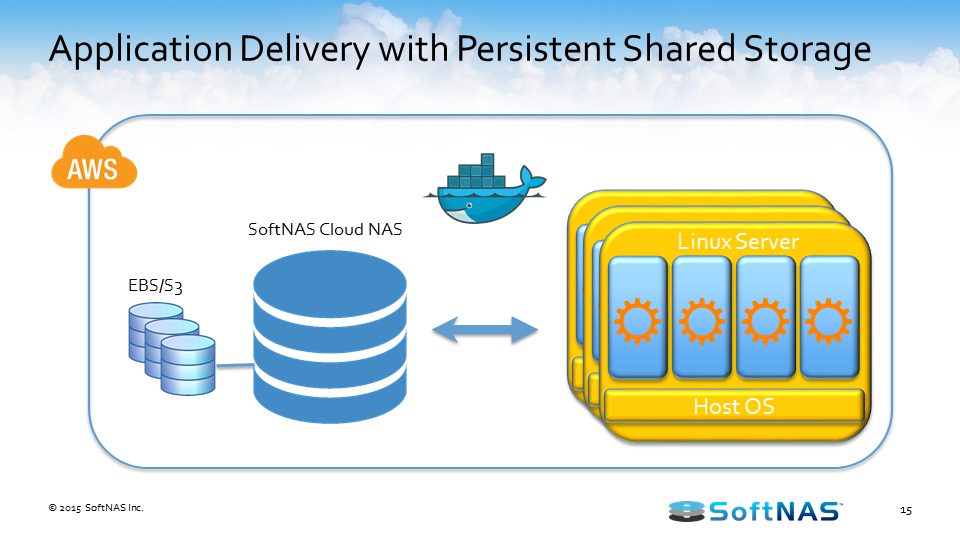
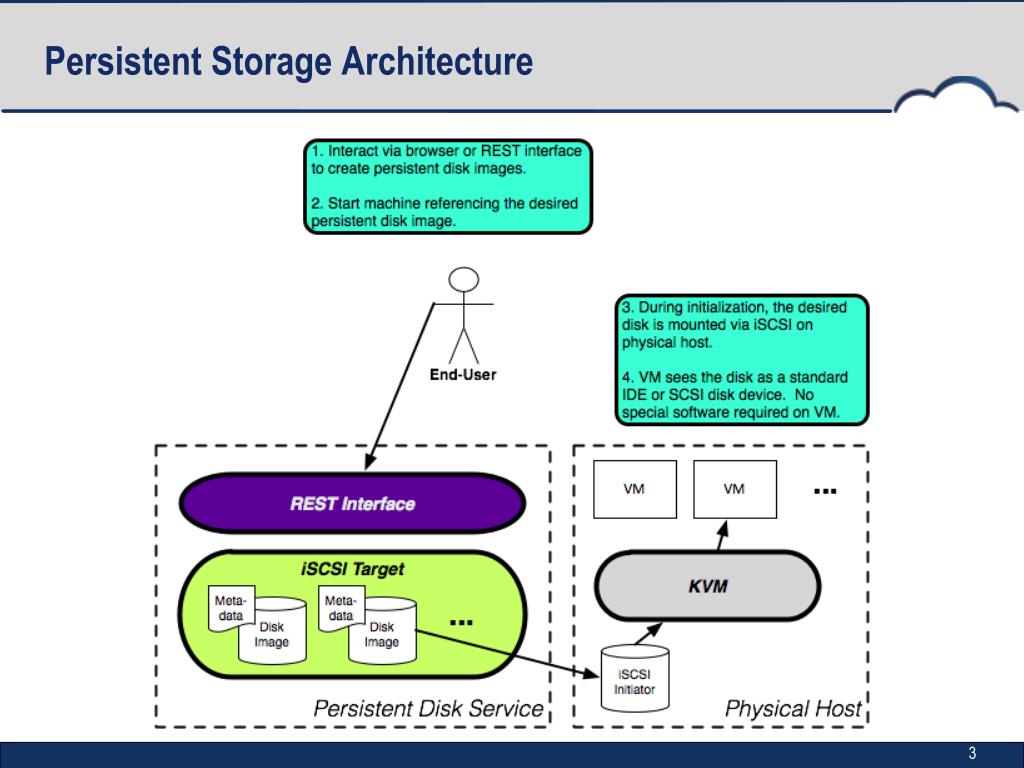
Modern development often involves containers and microservices. Even if your app is local-first, it may eventually need to back up its state to a cloud provider. Integrating durable persistent storage in your backend architecture—where user data can be safely offloaded when the device is online—is the final piece of the puzzle, complementing robust `data synchronization strategies` on the client. This hybrid approach, which complements the best persistent storage for local-first software development on the client, ensures that even if a user loses their device, their data remains safe and recoverable.
Performance Optimization Techniques for 2026
To keep your local-first app, powered by the best persistent storage for local-first software development, running at peak efficiency, you must implement intelligent data lifecycle management.
Lazy Loading and Indexing: Don’t load the entire database into memory. Implement robust indexing strategies so that your application only fetches the specific records needed for the current view.
Compression: With larger datasets, utilize browser-native compression algorithms to reduce the footprint of your local store.
Background Sync: Use Service Workers to handle data synchronization in the background. This ensures that the main thread stays clear for user interactions, maintaining that “buttery smooth” feeling users demand.
Navigating the Trade-offs of Local-First Development
Choosing the best persistent storage for local-first software development involves a set of trade-offs. You are essentially trading server-side control for user-side autonomy.
One of the most significant challenges is schema migration. When your database lives on the user’s machine, you cannot simply run a migration script on your server. You must design your application to handle versioned data schemas gracefully, ensuring that an old version of your app can still read data created by a newer version, or vice versa. This is a key consideration when implementing the best persistent storage for local-first software development.
Furthermore, consider the security implications and `data privacy compliance`. Because the data is stored locally, it is technically accessible to the user (or malicious actors with device access). Always implement client-side encryption for sensitive data, ensuring that even if the storage files are extracted, the information remains unreadable without the user’s master key. Ensuring robust security is paramount when deploying the best persistent storage for local-first software development.
Conclusion: The Future is Local
As we look toward the remainder of 2026 and beyond, the trend toward local-first development is only accelerating. By prioritizing persistent, reliable, and synchronized local storage, developers are creating a more resilient web—one where software is not a service that breaks when the internet cuts out, but a permanent tool that lives alongside the user. This acceleration underscores the ongoing quest for the best persistent storage for local-first software development.
Whether you choose SQLite-Wasm for its power, Dexie.js for its simplicity, or a custom CRDT-based solution for real-time collaboration, the key is to build with the user’s device as the primary environment. These choices represent different approaches to finding the best persistent storage for local-first software development. Start by analyzing your data requirements, implement a robust synchronization layer, and always keep the user’s data ownership at the forefront of your architecture.
The tools are ready. The standards are set. It is time to build the next generation of local-first applications.
Deep Dive into Synchronization Strategies: The Heart of Local-First Resilience
While the tools for the best persistent storage for local-first software development are robust, the true sophistication of a local-first application lies in its advanced `data synchronization strategies`. This layer is responsible for ensuring that data remains consistent across multiple devices for the same user, and potentially across multiple users collaborating on shared data, even in the face of intermittent connectivity and concurrent modifications.
One of the most powerful paradigms for achieving this is Conflict-free Replicated Data Types (CRDTs). Unlike traditional approaches that rely on a central server to mediate conflicts (e.g., “last-write-wins” which can lead to data loss), CRDTs are data structures designed to converge automatically, embodying the principle of `eventual consistency`. This means that regardless of the order in which operations are applied to replicas, all replicas will eventually reach the same state without requiring complex merging logic or centralized coordination. Examples include:
Counter CRDTs: Simple counters that can be incremented or decremented on any replica, and the final count is the sum of all operations.
Set CRDTs: Sets where elements can be added or removed. Different types exist, like “grow-only” sets (elements can only be added) or “two-phase” sets (elements can be added and then removed, but a removed element cannot be re-added).
Text Editing CRDTs: More complex CRDTs like those used in Yjs or Automerge allow for real-time collaborative text editing, where insertions and deletions from multiple users can be merged seamlessly without losing data or requiring a dominant version. These often leverage techniques like “operation transformation (OT)” principles within a CRDT framework, or purely CRDT-based approaches that track individual character insertions and deletions with unique identifiers.
The practical implication of CRDTs is profound: developers can build highly resilient, performant, and truly collaborative applications without the single point of failure or latency inherent in server-dependent conflict resolution. For instance, a team collaborating on a document in a local-first editor powered by a CRDT like Yjs can continue working even if the internet goes down, and their changes will automatically merge once connectivity is restored, without manual intervention or data loss. This contrasts sharply with traditional cloud-based editors where an internet outage halts productivity. This resilience is a key benefit when considering the best persistent storage for local-first software development.
Another synchronization strategy, particularly for simpler data models, involves delta synchronization. Instead of sending the entire dataset, only the changes (deltas) since the last sync are transmitted. This significantly reduces network bandwidth and improves sync speed, especially for large datasets. Implementing delta sync often requires careful tracking of changes at the record or field level, typically using timestamps or version numbers. For example, a note-taking app might only sync the new notes added or existing notes modified since the last successful sync, rather than uploading all notes. Such strategies are vital complements to the best persistent storage for local-first software development.
For scenarios where strong consistency is paramount and a server is involved (e.g., for shared data across users requiring strict ordering), operational transformation (OT) is another advanced technique. While powerful, OT implementations are notoriously complex and typically require a centralized server to coordinate the transformations, making them less “pure” local-first than CRDTs, but still relevant for certain hybrid architectures.
Advanced Considerations for Data Models in Local-First Development
Building a robust local-first application, and effectively leveraging the best persistent storage for local-first software development, also necessitates a thoughtful approach to data modeling and schema evolution.
Schema Evolution and Migration: In a local-first world, users might have varying versions of your application running on different devices, potentially leading to different database schemas. When you release an update that changes the data structure (e.g., adding a new field, renaming an existing one), you need a robust migration strategy. This challenge is central to managing the best persistent storage for local-first software development effectively. This involves:
Version Tracking: The local database should store its schema version.
Migration Scripts: Your application must include scripts to upgrade older schemas to newer ones. These scripts should be idempotent and handle potential data transformations gracefully.
Backward Compatibility: Ideally, new versions of the application should be able to read (and perhaps write, with caution) data from slightly older schemas, at least temporarily, to avoid forcing immediate upgrades on all devices. This adds complexity but enhances user experience.
Denormalization vs. Normalization: While traditional relational databases often advocate for highly normalized schemas to reduce data redundancy, local-first applications sometimes benefit from a degree of denormalization. By embedding related data directly within a document or record, you can reduce the number of local queries required to display information, leading to faster UI rendering and simplified access patterns, especially beneficial when working with document-oriented local stores like IndexedDB or PouchDB. However, this comes at the cost of increased data redundancy and more complex update logic if the embedded data needs to be modified independently. A balanced approach often involves denormalizing frequently accessed, tightly coupled data, while keeping less frequently accessed or highly mutable data normalized. This design choice is crucial when optimizing the best persistent storage for local-first software development.
Security and Privacy in a Local-First World
The emphasis on user data ownership is a cornerstone of local-first, and a key driver for selecting the best persistent storage for local-first software development, but it comes with critical security and privacy implications that developers must address diligently.
Client-Side Encryption: Storing data locally on a user’s device means it’s susceptible to physical access if the device is compromised. Implementing client-side encryption is paramount. This makes client-side encryption a non-negotiable feature for the best persistent storage for local-first software development. This can involve:
Full Database Encryption: Encrypting the entire local database file. SQLite extensions like SQLCipher offer this for SQLite-based solutions.
Field-Level Encryption: Encrypting specific sensitive fields within records before they are stored. This offers granular control but requires careful management of encryption keys.
In-Memory Decryption: Data should ideally be decrypted only when needed for display or processing and then re-encrypted or cleared from memory as soon as possible.
Secure Key Management: The biggest challenge with client-side encryption is securely managing the encryption keys. If the key is stored alongside the encrypted data, the security benefit is diminished. This is a complex but essential aspect of implementing the best persistent storage for local-first software development. Strategies include:
User Passphrases: Deriving encryption keys from a user-provided passphrase, often combined with key derivation functions (e.g., PBKDF2, scrypt) to increase computational cost and resistance to brute-force attacks.
Device-Specific Secure Enclaves: Utilizing hardware security features (e.g., iOS Keychain, Android KeyStore, TPM on desktops) to store keys securely, making them difficult to extract even if the device is compromised.
Zero-Knowledge Systems: Designing systems where the application itself never has access to the user’s decryption key, only encrypted blobs, relying on the user to provide the key for decryption.
Authentication and Authorization Challenges: When data resides primarily on the client, traditional server-centric authentication and authorization models need adaptation. This adaptation is crucial for maintaining security alongside the best persistent storage for local-first software development.
Offline Authentication: Users should be able to authenticate and access their local data even without an internet connection. This requires securely storing authentication tokens or credentials locally, often protected by biometrics or a local PIN.
Decentralized Authorization: For collaborative local-first applications, authorization (who can do what to which piece of data) can become complex. CRDTs can be extended with access control lists (ACLs) or cryptographic signatures to ensure only authorized users can modify specific data elements. This often involves public-key cryptography where users sign their operations, and these signatures are verified locally by other replicas.
Industry trends show a growing demand for privacy. A 2023 survey by Cisco found that 81% of consumers are concerned about the privacy of their data, and 48% have switched companies or providers over data privacy concerns. Local-first architectures, with their inherent privacy benefits, are well-positioned to meet these demands and ensure `data privacy compliance`, provided robust client-side security is implemented. This makes the choice of the best persistent storage for local-first software development a strategic decision for market relevance.
Performance Optimization for Local-First Applications
Local-first doesn’t automatically mean “fast.” Even with the best persistent storage for local-first software development, developers building for `mobile-first development` must still optimize for performance to deliver a snappy user experience.
Local Database Indexing: Just like server-side databases, local databases benefit significantly from proper indexing. Creating indexes on frequently queried fields (e.g., user IDs, timestamps, categories) can drastically reduce query times, especially for larger datasets. Tools like IndexedDB allow for the creation of object stores and indexes, while SQLite WASM offers full SQL indexing capabilities. This is a fundamental technique for optimizing the best persistent storage for local-first software development.
Minimizing Synchronization Overhead (Delta Sync and Partial Sync): As mentioned earlier, delta synchronization is crucial. Beyond that, consider partial synchronization, where only a subset of the data relevant to the current user or view is synchronized. For example, a large project management application might only sync tasks assigned to the current user and projects they are actively working on, rather than the entire organizational dataset. This reduces the initial sync load and ongoing bandwidth usage. These methods enhance the efficiency of the best persistent storage for local-first software development.
Handling Large Datasets Locally: While local-first is great for resilience, storing truly massive datasets (terabytes) locally might not always be feasible or desirable. This is a key challenge when scaling the best persistent storage for local-first software development. For such scenarios, consider:
Virtualization/Lazy Loading: Only loading and rendering data into the UI as it becomes visible (e.g., infinite scrolling lists).
Archiving/Offloading: Providing mechanisms for users to archive older data to cloud storage or external drives, removing it from the active local dataset.
Progressive Web App (PWA) Caching: For web-based local-first apps, leveraging Service Workers to cache assets and data efficiently can provide near-instant loading times and offline access to previously viewed content.
Testing and Debugging Local-First Applications
The distributed nature of local-first, particularly when implementing the best persistent storage for local-first software development, introduces unique testing and debugging challenges.
Simulating Offline States: Thoroughly test how your application behaves when connectivity is lost, regained, or intermittent. This is crucial for validating the resilience of the best persistent storage for local-first software development. This includes:
Graceful Degradation: Does the UI clearly indicate offline status? Can users continue to work?
Queuing Operations: Are local changes correctly queued and sent once online?
Error Handling: How does the app handle failed sync attempts?
Conflict Simulation: This is critical for CRDT-based or any multi-device sync solution. This is critical for ensuring the integrity of the best persistent storage for local-first software development in collaborative environments.
Concurrent Modifications: Simulate multiple users (or the same user on multiple devices) making conflicting changes to the same piece of data offline.
Merge Verification: Verify that conflicts are resolved correctly according to your chosen strategy (CRDT convergence, last-write-wins if used, etc.) and that no data is lost or corrupted. Tools like Cypress or Playwright can be used to script these multi-user scenarios.
Multi-Device Scenarios: Test the application across different device types, operating systems, and browser versions, as local storage APIs and performance characteristics can vary. Ensure a consistent experience and reliable synchronization across this diverse ecosystem. This ensures the chosen best persistent storage for local-first software development performs reliably everywhere.
The Nuanced Role of Cloud Services in a Local-First Architecture
While local-first emphasizes client autonomy, cloud services are not entirely banished; their role simply shifts from being the primary source of truth to a secondary, optional layer that enhances functionality. This nuanced relationship is key to understanding how to complement the best persistent storage for local-first software development with cloud capabilities, especially in distributed `edge computing` environments.
Backup and Disaster Recovery: The cloud remains an invaluable tool for backing up local data. Even with robust local storage, hardware failures, device loss, or accidental deletions can occur. A seamless, encrypted cloud backup mechanism provides peace of mind and allows users to restore their data to a new device. This complements the resilience offered by the best persistent storage for local-first software development.
Seamless Sharing and Collaboration: For applications that require sharing data or collaborating with others, a cloud service often acts as the synchronization hub. It doesn’t necessarily own the data, but rather facilitates the exchange of CRDT operations or delta updates between devices and users. Services like Supabase or Firebase can be configured as backend targets for PouchDB/CouchDB, or as simple message brokers for CRDT operations, without dictating the primary data model. The key distinction is that the application functions fully even without this cloud layer, which merely adds convenience and extended capabilities. This demonstrates how cloud services can extend the capabilities of the best persistent storage for local-first software development.
Initial Data Seeding and Cold Start: For new users or new devices, the cloud can provide an efficient way to “seed” the local database with existing data, avoiding a slow, piecemeal sync from another local device. This optimizes the initial setup when utilizing the best persistent storage for local-first software development.
Compute-Intensive Operations: For tasks that are too computationally intensive for client devices (e.g., complex analytics, large-scale data processing, AI model inference), the cloud can serve as a powerful processing engine, returning only the results to the local application. This allows the best persistent storage for local-first software development to focus on local data management while offloading heavy computation.
In essence, the cloud transitions from being the demanding master to a helpful, always-available assistant, ready to serve when needed, but never critical for the core functionality or data integrity of the local-first application.
The Future is Local-First
The paradigm shift towards local-first development is not merely a technical curiosity; it represents a fundamental re-alignment with user needs and digital rights. By prioritizing resilience, privacy, and performance through client-centric data management, developers can create applications that are inherently more robust, more respectful of user data, and more empowering. This shift makes the discussion around the best persistent storage for local-first software development more relevant than ever.
The maturation of web technologies like WebAssembly and advanced client-side databases, coupled with sophisticated synchronization techniques like CRDTs, has removed many of the historical barriers to building truly local-first experiences. We are moving beyond the limitations of always-online dependencies, towards a future where software is truly yours, available whenever and wherever you need it, regardless of network conditions. These advancements make it easier to implement the best persistent storage for local-first software development.
Embracing local-first is an investment in a more robust, private, and user-centric digital future. It is a call to action for developers to leverage these powerful tools and paradigms to build the next generation of applications that put the user, and their data, firmly in control. The groundwork is laid, the technology is proven, and the opportunity is immense. It’s time to build applications that truly work for their users, first and foremost, on their local devices. Ultimately, the success of this future hinges on choosing and implementing the best persistent storage for local-first software development.