
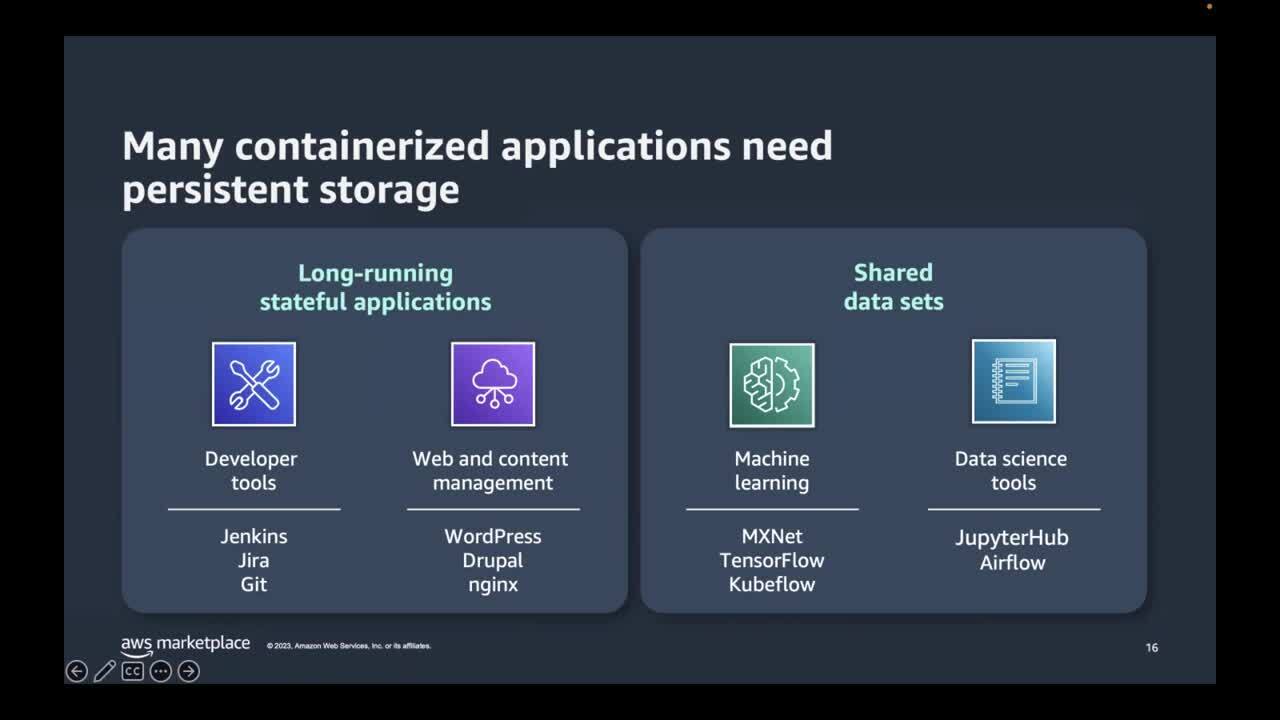
The landscape of cloud computing has shifted dramatically. As we navigate through 2026, the debate is no longer about whether to go serverless, but how to manage the massive amounts of data these ephemeral environments generate. By definition, serverless functions like AWS Lambda or Google Cloud Functions are stateless. However, modern enterprise applications—ranging from AI model inference to real-time video processing and other demanding containerized workloads—demand high-performance, persistent file storage that can survive the lifecycle of a single function execution. Establishing a robust data persistence layer is paramount for these modern applications. This makes choosing the best persistent file storage for serverless applications, among various cloud storage solutions, a critical decision.
Finding the best persistent file storage for serverless applications requires a balance between latency, scalability, and cost. In this comprehensive guide, we will explore the top-tier solutions dominating the market in 2026 and how to architect your stack for maximum efficiency.
The Evolution of Serverless Storage in 2026
In the early days of serverless, developers were limited to small `/tmp` directories and external databases. Fast forward to 2026, and the “stateless” constraint is effectively a thing of the past. We now have cloud-native file systems that mount directly to serverless execution environments, providing the same experience as a local hard drive but with the infinite scale of the cloud, making the search for the best persistent file storage for serverless applications within evolving serverless architecture patterns more complex and exciting.
The primary challenge remains the “Cold Start” problem and the overhead of mounting storage. However, with the introduction of Sub-Millisecond Mount Times and Predictive Scaling, the integration between compute and storage has never been more seamless.
1. Amazon EFS: The “Set-and-Forget” Serverless File System
Amazon Elastic File System (EFS) remains the industry leader for persistent file storage in serverless architectures. As a fully managed file service, in 2026, EFS has evolved into a fully autonomous system that optimizes itself based on access patterns, solidifying its position as a strong contender for the best persistent file storage for serverless applications.
Why EFS is the Top Choice
For developers using AWS Lambda or AWS Fargate, EFS provides a standardized NFS (Network File System) interface. This allows multiple serverless functions to read and write to the same data source simultaneously.
Zero Management: There are no disks to provision or clusters to manage.
Elastic Scalability: It grows and shrinks automatically as you add or remove files.
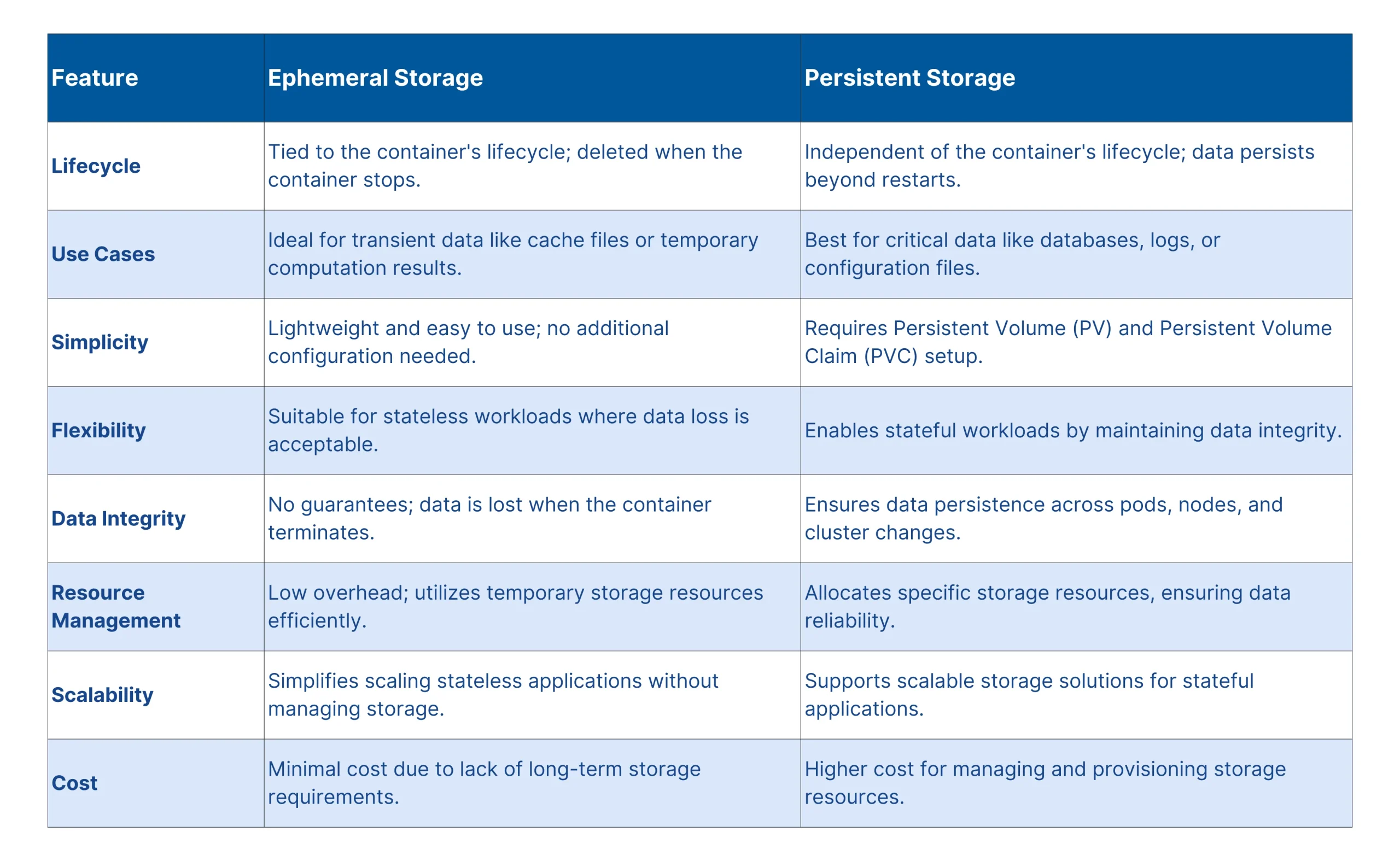
Persistent State: Unlike the ephemeral `/tmp` storage, data in EFS persists indefinitely until deleted.
Improved Latency: As of 2026, EFS offers ultra-low latency tiers specifically designed for high-frequency serverless triggers.
Use Case: Collaborative Content Management
Imagine a serverless application where hundreds of Lambda functions are simultaneously processing image uploads. With Amazon EFS, each function can access a shared directory to store thumbnails, metadata, and logs without worrying about data consistency or race conditions.
2. Amazon S3: The Giant of Object Storage
While EFS is a file system, Amazon S3 (Simple Storage Service) is the king of object storage. In 2026, the lines between file and object storage have blurred, but S3 remains the most cost-effective solution for massive data sets, offering a different approach to finding the best persistent file storage for serverless applications.
S3 Express One Zone
Newer high-performance tiers, such as S3 Express One Zone, have revolutionized serverless workflows. This tier is designed for the most demanding workloads, offering 10x better performance than standard S3. It is ideal for:
- Machine Learning Training: Feeding data into serverless training jobs.
- Financial Modeling: Running thousands of parallel simulations.
- Big Data Analytics: Storing intermediate results of MapReduce-style serverless tasks.
3. Simplyblock: The Performance Disruptor
For applications that require the absolute highest IOPS (Input/Output Operations Per Second), simplyblock has emerged as a major player in 2026. It provides scalable block storage that bridges the gap between traditional SANs and modern serverless environments, making it a strong candidate for the best persistent file storage for serverless applications in high-performance scenarios, including demanding high-performance computing (HPC) workloads.
The Power of NVMe-over-Fabrics
Simplyblock utilizes NVMe-over-Fabrics (NVMe-oF) to deliver storage speeds that were previously impossible in a serverless context. If your serverless application involves heavy database operations or requires low-latency random I/O, simplyblock is often the preferred backend.
High Throughput: Perfect for data-intensive containerized applications.
Thin Provisioning: Saves costs by only using the storage you actually need.
Multi-Cloud Compatibility: Unlike provider-specific tools, simplyblock can often be used across different cloud environments.
4. Comparing File, Object, and Block Storage for Serverless
Choosing the best persistent file storage depends entirely on your specific workload requirements. Understanding these differences is key to identifying the best persistent file storage for serverless applications and implementing effective storage optimization strategies. Here is a quick breakdown of how these technologies compare in 2026:
| Feature | Amazon EFS (File) | Amazon S3 (Object) | Simplyblock (Block) |
| :— | :— | :— | :— |
| Access Pattern | Shared (Many-to-Many) | API-based (Put/Get) | High-speed (One-to-One) |
| Latency | Low (Millisecond) | Moderate to Low | Ultra-Low (Microsecond) |
| Scaling | Automatic | Infinite | Managed/Scalable |
| Best For | Shared config, CMS | Media, Data Lakes | Databases, AI Training |
| Cost | Premium | Economical | Performance-based |
5. Architectural Best Practices for 2026
To get the most out of your persistent storage, you must follow modern architectural patterns, especially when designing for microservices-based applications. In 2026, the focus has shifted toward Storage-First Design, which is crucial when determining the best persistent file storage for serverless applications.
Minimize Data Movement
The most expensive part of serverless isn’t compute—it’s data egress. Keep your storage in the same availability zone (AZ) as your serverless functions. This is particularly vital in edge computing scenarios where latency is critical. Using VPC Endpoints for S3 and EFS can significantly reduce costs and improve security by keeping traffic within the internal Amazon network.
Implement Intelligent Tiering
Don’t pay for high-performance storage for data that is rarely accessed. Use Lifecycle Policies to move older files from EFS or S3 Express into lower-cost tiers like S3 Glacier Deep Archive. Effective data lifecycle management is key here. In 2026, AI-driven tools can now automate this process by predicting when a file will no longer be needed for active compute.
Security and Encryption
With the rise of sophisticated cyber threats, Encryption at Rest and Encryption in Transit are non-negotiable. Ensure that your persistent storage uses AWS KMS (Key Management Service) with customer-managed keys for maximum compliance.
6. The Role of Serverless Databases in Persistence
Sometimes, the “file” you need to store is actually structured data. In these cases, Amazon DynamoDB or Amazon Aurora Serverless v3 (the 2026 standard) might be better than a file system, though they serve different purposes than what is typically considered the best persistent file storage for serverless applications.
DynamoDB: Best for key-value pairs and small JSON documents. It offers single-digit millisecond performance at any scale.
- Aurora Serverless: Best for complex relational data. The v3 iteration allows for instant scaling and “pause-on-zero,” making it incredibly cost-effective for intermittent workloads.
7. Overcoming the Limitations of Serverless Storage
Despite the advancements in 2026, there are still hurdles to overcome in achieving the ideal best persistent file storage for serverless applications.
Throughput Limits
Every storage system has a “burst” limit. If your serverless app scales from 0 to 10,000 concurrent executions in seconds, you might hit IOPS throttling. To mitigate this, developers use Provisioned Throughput on EFS or distributed caching layers like Amazon ElastiCache (Serverless).
Cold Start Latency
Mounting a file system adds a small overhead to the “cold start” of a function. While this has been reduced to under 50ms in 2026, it is still a factor for ultra-latency-sensitive applications like high-frequency trading or real-time gaming.
Conclusion: Which Storage Should You Choose?
In 2026, the “best” persistent file storage for serverless applications is rarely a single product. It is usually a hybrid approach, where the selection of the best persistent file storage for serverless applications is tailored to specific needs:
- Use Amazon EFS for shared application code, configuration files, and stateful processing where multiple functions need simultaneous access.
- Use Amazon S3 for your data lake, long-term backups, and massive media files.
- Use Simplyblock for specialized workloads that demand the highest possible block-level performance.
- Use DynamoDB for high-velocity metadata and session state.
By selecting the right cloud storage solutions, you ensure that your serverless applications are not just fast and scalable, but also resilient and cost-effective in the modern cloud era.