
In the hyper-connected professional landscape of 2026, the traditional 8-hour workday has evolved into a battlefield for your attention. With the integration of advanced AI workflows, constant notifications, and the blurred lines between remote and office life, maintaining persistent focus is no longer just a soft skill—it is a competitive necessity. If you find yourself hitting the “afternoon slump” by 2:00 PM or losing hours to “context switching,” you are not alone.
Maintaining deep concentration for a full eight hours is a physiological and psychological challenge. However, by optimizing your environment, managing your cognitive load, and leveraging modern productivity science, you can transform your workday from a struggle into a showcase of high-impact output. This guide explores the most effective, evidence-based strategies to keep your mental edge sharp throughout the entire day.
1. The Science of Cognitive Energy Management
The biggest mistake most professionals make is treating their brain like a machine that can run at 100% capacity for eight hours straight. In reality, our cognitive energy fluctuates in cycles known as ultradian rhythms. Understanding these cycles is the cornerstone of sustained productivity.
Aligning Tasks with Your Biological Prime Time
Most people experience a peak in alertness mid-morning, followed by a sharp decline after lunch. To maintain persistent focus, you must identify your “Chronotype.” If you are a morning lark, tackle your most mentally demanding tasks—those requiring high-level problem solving or creative strategy—before noon. Save administrative tasks, emails, and meetings for the lower-energy periods of your afternoon.
The Power of Micro-Restoration
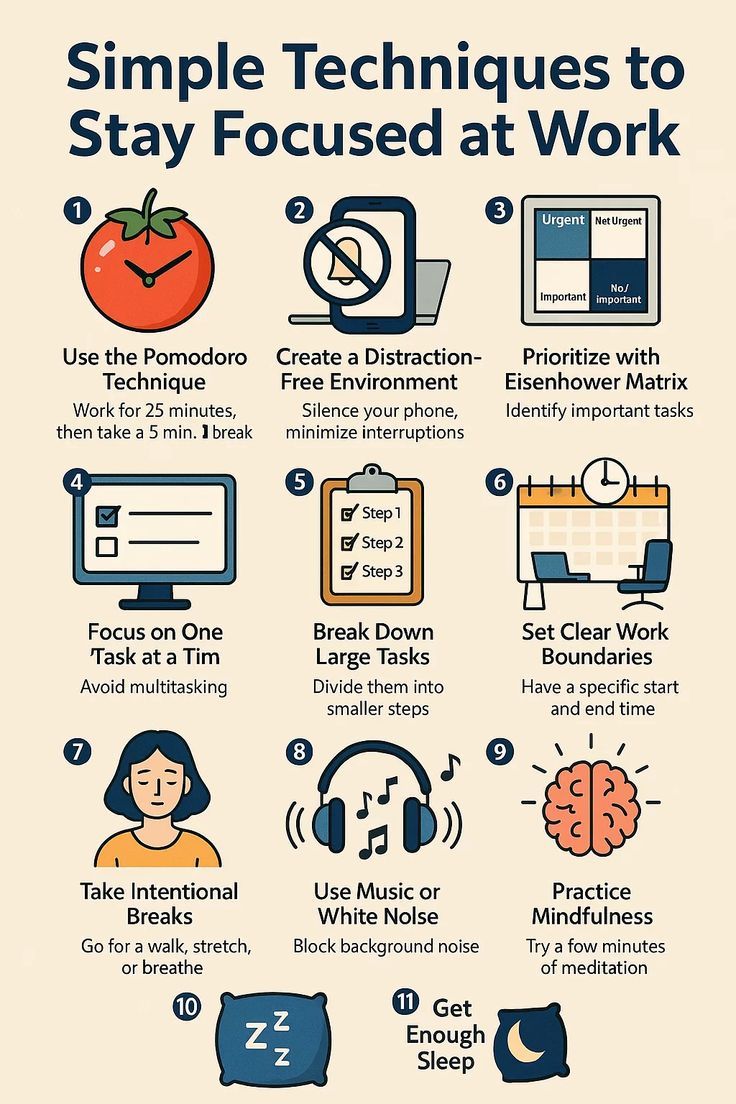
You cannot sprint a marathon. By 2026, the “always-on” culture has been replaced by a focus on intentional recovery. Incorporating short, non-screen-based breaks every 90 minutes can reset your prefrontal cortex. Whether it is a quick walk, a breathing exercise, or simply stepping away from your monitor, these moments prevent the mental fatigue that leads to burnout.
2. Engineering Your Environment for Deep Work
Your environment is either a catalyst for concentration or a gateway to distraction. In an era where digital noise is constant, you must proactively curate your workspace to protect your attention span.
The Remote Advantage: Minimizing External Interruptions
If your role allows, remote working remains one of the most effective ways to minimize the “drive-by” distractions common in open-plan offices. When working from home, designate a specific “focus zone” that is used exclusively for professional tasks. Your brain will eventually associate this physical space with deep work, making it easier to enter a “flow state” quickly.
Digital Minimalism and Notification Hygiene
By 2026, AI-driven notification systems have become smarter at filtering, but they still compete for your limited bandwidth. Implement a “Strict Mode” for your devices:
Batch processing: Check emails and messages only at three specific intervals during the day.
App blocking: Use site-blocker tools to restrict access to social media or news sites during core hours.
- Single-tasking: Research consistently shows that multitasking reduces productivity by up to 40%. Commit to one tab, one project, and one goal at a time.
3. Advanced Time-Blocking Techniques
Time management is not just about having a calendar; it is about protecting your time from being hijacked by others. The most successful professionals in 2026 use a “Time-Block” strategy to ensure their most important work gets done.
The “Eat the Frog” Method
Mark Twain once suggested that if you eat a live frog first thing in the morning, nothing worse will happen to you the rest of the day. Apply this to your work: identify the single most important task that requires deep focus and complete it before checking any communication channels. This provides a sense of accomplishment that carries you through the rest of the day.
Theme-Based Days
If your role involves diverse responsibilities, try thematic scheduling. Dedicate Mondays to planning and strategy, Tuesdays to deep-dive project work, and Wednesdays to collaborative meetings. By grouping similar tasks, you reduce the cognitive cost of context switching, allowing your brain to stay in a consistent mode of operation for longer periods.
4. Fueling Focus: Nutrition and Physical Well-being
You cannot maintain mental clarity if your physical foundation is crumbling. Persistent focus is directly linked to your blood sugar levels, hydration, and sleep quality.
Avoiding the Post-Lunch Crash
The “afternoon slump” is often a result of blood sugar spikes followed by crashes. Focus on low-glycemic index snacks—such as nuts, seeds, or berries—rather than refined sugars or heavy carbohydrates. Maintaining stable energy levels is essential for keeping your focus sharp during those final hours of the workday.
The Role of Movement
Physical activity increases blood flow to the brain, which enhances executive function and memory. Even a 5-minute stretch or a set of desk exercises can significantly improve your ability to refocus after a long, sedentary session.
5. Cultivating a “Focus-First” Mindset
Finally, focus is a muscle that must be trained. If you find your mind wandering, do not punish yourself. Instead, use mindfulness techniques to gently guide your attention back to the task at hand.
Mindfulness as a Productivity Tool
Modern research confirms that regular mindfulness practice improves your attentional control. By practicing just 10 minutes of meditation, you can strengthen your ability to notice when you have been distracted and return to your work without losing momentum. This “metacognitive” awareness is the secret weapon of the world’s most productive people.
Setting Clear, Micro-Goals
Large projects can be overwhelming, causing the brain to procrastinate. Break every project into micro-goals that can be completed in 30 to 60 minutes. Checking these items off your list creates a dopamine feedback loop, which reinforces your motivation and keeps you engaged for the duration of the 8-hour workday.
The Future of Work: Why Focus Matters More Than Ever
In 2026, the ability to maintain persistent focus is becoming a rare and highly valued commodity. As automation handles the mundane, the human value proposition shifts toward complex decision-making, creative problem-solving, and deep strategic thinking. These skills are impossible to perform effectively in a state of fractured attention.
By adopting these strategies—managing your biological rhythms, engineering your environment, and prioritizing your physical health—you are not just working harder; you are working smarter. You are reclaiming your most valuable asset: your time and your attention.
Conclusion: Start Small, Stay Consistent
Maintaining persistent focus during an 8-hour workday is not about achieving perfection every single day. It is about building a sustainable system that supports your best work. Start by picking two of the strategies mentioned above—perhaps the “Eat the Frog” method and a strict notification policy—and implement them for one week.
Observe how your stress levels decrease and your quality of output increases. As you refine your approach, you will find that the 8-hour workday no longer feels like a slog, but rather a structured opportunity to achieve your professional goals. In the fast-paced world of 2026, those who master their focus will inevitably be the ones who lead their fields. Take control of your attention today, and watch your productivity soar.