
In 2026, the era of “amnesiac” AI—where every chat session feels like meeting a stranger—is officially over. To build a truly useful personal assistant, you need more than just a fast LLM; you need a system that remembers your preferences, past projects, and specific nuances of your life.
Training a personal AI for long-term contextual memory is the bridge between a generic chatbot and a digital twin. By moving beyond simple prompt engineering and into the realm of Context Engineering, you can create agents that feel consistent, reliable, and deeply intuitive.

Why Context Matters: Moving Beyond Short-Term Limits
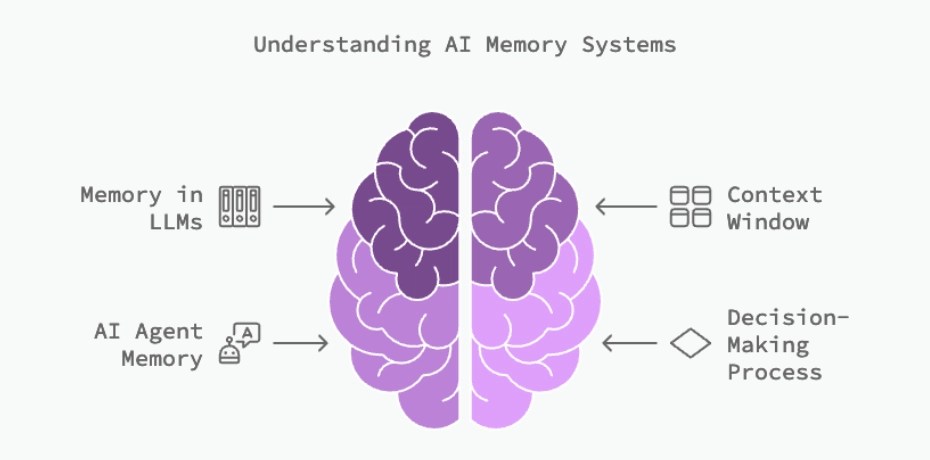
Most standard AI models operate on a “stateless” basis. Once the context window closes, the information is gone. However, long-term memory architectures allow agents to store, recall, and synthesize information across weeks, months, or even years.
By implementing state management, you ensure that your agent isn’t just reacting to the last prompt, but is instead accessing a curated library of your history. This is the foundation of agentic personalization, turning your AI into a partner that learns from your feedback loop.
The Architecture of Recall: RAG vs. Dedicated Memory Layers
When building your personal AI stack, you will encounter two primary strategies: Retrieval-Augmented Generation (RAG) and Dedicated Memory Layers.
1. Retrieval-Augmented Generation (RAG)
RAG is the “library” approach. You store your documents and chat logs in a vector database. When you ask a question, the system searches the database for relevant chunks of information and feeds them into the prompt. It is excellent for factual recall but can sometimes lack the “personality” or “evolving sentiment” of a true companion.
2. Dedicated Memory Layers (Mem0 & LangGraph)
Tools like Mem0 have revolutionized the game by creating a dynamic memory layer that sits on top of your LLM. Unlike static RAG, these systems update themselves. If you tell your AI, “I prefer concise meetings,” the memory layer updates that preference globally, ensuring your agent behaves differently in future interactions.

How to Implement Long-Term Memory: A Practical Workflow
To build a robust system in 2026, you need to integrate specialized frameworks. Here is the recommended workflow for developers and power users:
Step 1: Establish State Management
Use the RunContextWrapper from the OpenAI Agents SDK or similar wrappers in LangGraph. This allows you to define what the AI “knows” at the start of a session. By injecting user-specific metadata into the system prompt, you set the baseline for contextual awareness.
Step 2: Implement a Vector Database
For long-term storage, you need a scalable vector DB (like Pinecone, Milvus, or Weaviate). This acts as the “long-term brain” where your conversations are embedded as vectors, allowing the AI to perform semantic searches for historical context.
Step 3: Use an Agentic Orchestrator
Frameworks like LangGraph allow you to create loops where the AI decides when to save information and when to search for it. This is crucial for contextual memory, as it prevents the AI from becoming bloated with irrelevant data.
Essential Frameworks to Watch in 2026
If you are building or refining your personal agent, these open-source tools represent the state-of-the-art:
- Mem0: The gold standard for personalized, evolving memory layers.
- LangGraph: Essential for creating stateful, multi-step agent workflows.
- AutoGPT/AgentProtocol: Useful for agents that need to perform long-running tasks autonomously.
- ChromaDB: A lightweight, developer-friendly vector database for local memory management.
Privacy and Cost Considerations at Scale
Building a “second brain” for your AI comes with responsibilities. As you increase the depth of your AI’s memory, keep these three factors in mind:
- Data Privacy: Always use local embedding models if you are storing sensitive personal data. Encrypt your vector database to ensure your “digital memory” remains yours.
- Context Bloat: Don’t feed everything into the context window. Use semantic summarization to condense old conversations into actionable insights, rather than pasting raw logs.
- Cost Optimization: Frequent calls to LLMs for memory retrieval can get expensive. Cache common queries and prioritize “selective retrieval” over “full context injection.”
Conclusion: The Future of Agentic Personalization
In 2026, the most powerful AI isn’t the one with the highest parameter count—it’s the one that knows you best. By utilizing context engineering, dynamic memory layers, and state-aware frameworks, you can transform a generic AI into a sophisticated, long-term partner.
Start small by integrating a dedicated memory layer like Mem0 into your existing workflows, and watch as your personal AI evolves from a simple tool into an indispensable extension of your own intelligence.